Authentic Integration of Science and Engineering
A Research Summary on NGSS-Based Engineering Instruction
Key Insight: Engineering in the classroom is often reduced to simple build-and-test activities that lack scientific depth. This research summary provides a framework for integrating engineering as a rigorous, three-dimensional practice that enhances—rather than distracts from—scientific inquiry.
Framework Applied:
The Three Perspectives: I categorize engineering instruction into Pedagogy (how we teach), Epistemology (what engineers value), and Methodology (the design process). This ensures a holistic learning experience that goes beyond mere "tinkering."
Authentic Problem Solving: I advocate for "Socially Engaged Engineering," where students solve problems for real users with real-world constraints, moving beyond linear, "sanitized" textbook challenges.
Socio-Technical Thinking: My research emphasizes that engineering is never purely technical; it is a human endeavor shaped by economic, environmental, and social trade-offs.
I use these evidence-based frameworks to audit and align curriculum with national standards (NGSS), ensuring learning products are both scientifically rigorous and highly engaging for modern learners.
Summary of my work:
Issues related to engineering in NGSS
NGSS represents the first time engineering has been integrated into national science standards. While this is a positive first step, there are some challenges that arise. The root of these challenges surface when we tease engineering apart from various perspectives. Those perspectives are pedagogy, epistemology, and methodology.
Engineering is challenging to integrate because NGSS described or confuses engineering in different places as either a pedagogy, epistemology, or methodology.
NGSS conflate engineering practices (SEPs) and engineering knowledge (ETS DCI).
The idea of engineering knowledge is not well defined by NGSS.
Science and engineering have meaningful differences pedagogically that are not clear and do not surface explicitly in NGSS.
NGSS three-dimensional learning necessitates authentic design projects.
Best Practices related to NGSS-based teaching of engineering
As was done in the Issues section, the Best Practices will be analyzed via the three perspectives: pedagogy, epistemology, and methodology. The comparison of these three perspectives of design is necessary to clarify practices and knowledge as well as the appropriate methods for teaching them (Purzer 2017).
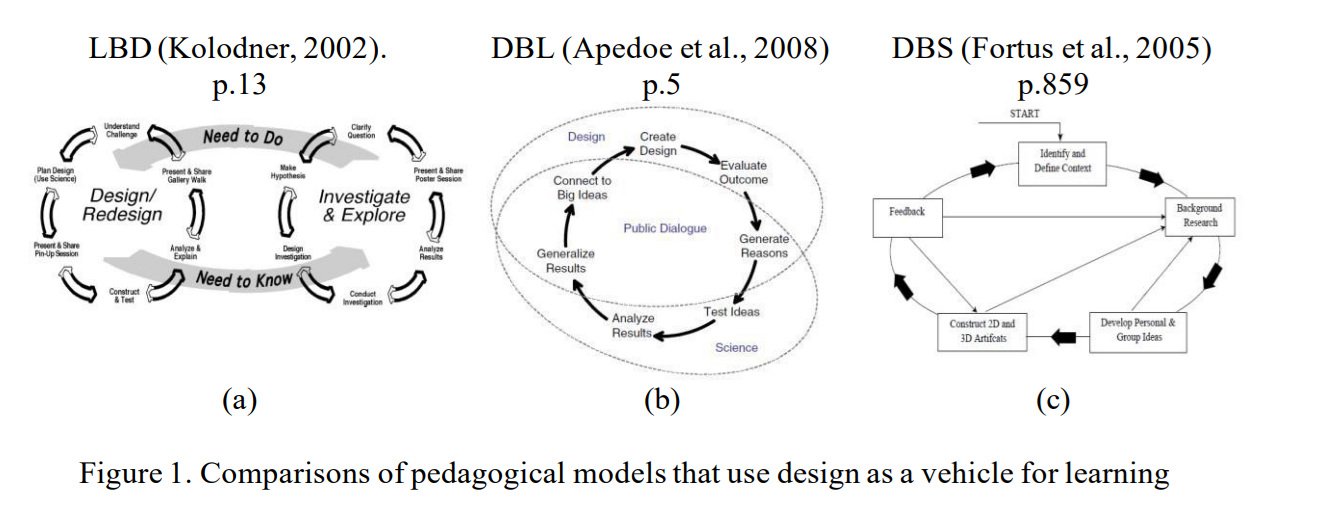
Integrate engineering pedagogy into science education such as Learning By Design (LBD), Design Based Learning (DBL) or Design Based Science (DBS).
Delineate engineering practices (methodology) and engineering knowledge (epistemology).
Address engineering knowledge (epistemology) or the nature of engineering.
Address meaningful differences between science and engineering practices (methodology).
Teach engineering authentically.